Passing the Torch: What the Fed Leadership Transition Means for Your Portfolio
Transition
Salamon, Marcelo
4/27/20264 min read
Executive Summary
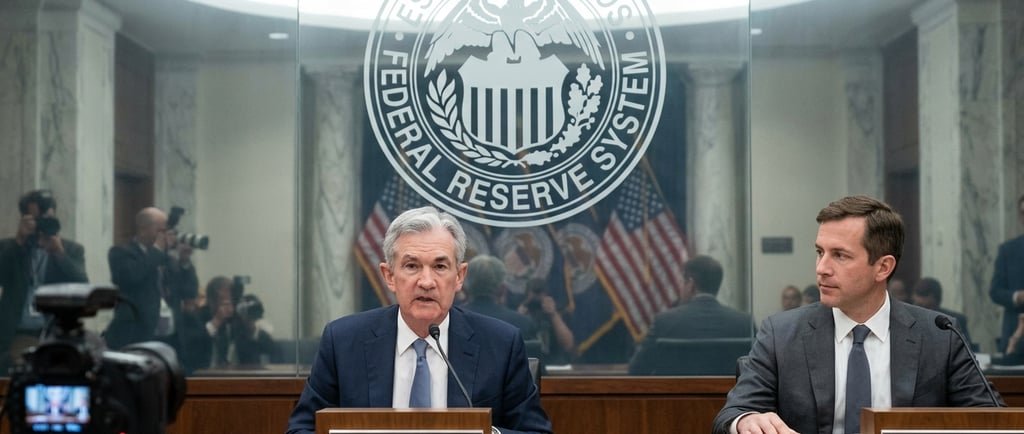
This report evaluates the transition from the outgoing "steady hand" policy framework to the incoming "growth catalyst" profile of the Warsh Fed. The outgoing leadership was defined by a data-dependent, hawkish commitment to a 2% inflation target, even at the cost of labor market cooling. In contrast, the current transition introduces a leadership style focused on "economic sustainability" and potentially more flexible interpretations of the dual mandate. As the market enters a period of "price discovery," equity sectors are rotating in anticipation of shifting discount rates, while the credit market recalibrates the yield curve based on expectations of the new Chair's approach to liquidity. Ultimately, the Fed's transition is an exercise in nuance; for investors, successfully navigating this change requires shifting from a focus on "inflationary fire" to one on "structural economic growth."
Introduction
The Federal Reserve is often described as the "steering wheel" of the global economy. When the hands on that wheel change, the market doesn't just watch—it reacts. Understanding the shift in leadership at the Fed requires looking past the names and into the specific philosophies regarding inflation, employment, and the "dual mandate" established by U.S. law.
In the United States, the Federal Reserve operates under the Federal Reserve Act, which tasks the Board of Governors with maintaining price stability and maximum sustainable employment. However, how a Chair interprets these goals can vary significantly.
The Outgoing Leadership: The "Steady Hand" Profile
The departing leadership has generally been characterized by a data-dependent and transparent approach. Their tenure focused on navigating post-pandemic recovery and aggressive "quantitative tightening" to reel in inflation.
The Philosophy: A commitment to the 2% inflation target above all else, even at the risk of cooling the labor market.
The Market Impact: This era was defined by "Forward Guidance"—explicitly telling the markets what to expect months in advance to minimize volatility.
The Incoming Leadership: The "Growth Catalyst" Profile
The transition introduces a leadership style often perceived as more accommodating or "dovish," though strictly bound by current economic pressures.
The Philosophy: A potential shift toward prioritizing the "maximum employment" side of the mandate, or perhaps a more flexible interpretation of how quickly inflation must return to the target.
The Market Impact: Expect a focus on "neutral" interest rates—finding the sweet spot where the economy neither overheats nor freezes.
What Changes for the Stock Market? (Equities)
The transition usually triggers a period of "price discovery." Equity markets dislike uncertainty, and a change at the top introduces a new variable.
Valuation Shifts: If the new leadership signals a slower pace of rate hikes, growth stocks (especially in the tech sector) often see a boost in valuation as the "discount rate" applied to future earnings drops.
Sector Rotation: A more "dovish" Fed can breathe life into small-cap stocks that are more sensitive to borrowing costs, while a "hawkish" transition might favor defensive sectors like utilities or healthcare.
What Changes for the Credit and Bond Markets? (Fixed Income)
The credit market is where the Fed’s influence is most immediate. Because the Fed controls the Federal Funds Rate, the entire yield curve shifts in response to their rhetoric.
The Yield Curve: With new leadership, the market often bets on the "long end" of the curve. If investors believe the new Chair will be soft on inflation, long-term bond yields may rise to compensate for future inflation risk.
Credit Spreads: For corporate borrowers, a transition is a litmus test. If the incoming Chair is perceived as supportive of liquidity, credit spreads (the difference between corporate and government bond yields) tend to tighten, making it cheaper for companies to refinance debt.
The Dollar Factor: In the U.S. legal and economic framework, the Fed’s actions dictate the strength of the dollar. A leadership change that suggests lower rates relative to the rest of the world can weaken the USD, impacting international trade balances and commodity prices.
The Bottom Line for Your Portfolio
Transitions at the Federal Reserve are rarely about a total reversal of policy; they are about nuance and tone. While the outgoing leadership focused on the "inflation fire," the incoming team is likely to focus on "economic sustainability."
For investors, this means $1 invested today faces a different risk profile than it did six months ago. Diversification remains the only "free lunch," but keeping a close eye on the first few FOMC press conferences of the new term will be vital for anticipating where the next wave of liquidity—or tightening—will hit.
Conclusion
Transitions at the Federal Reserve are rarely about a total reversal of policy; they are about nuance, tone, and the prioritization of specific economic levers. While the outgoing leadership was primarily tasked with extinguishing the "inflation fire," the incoming Warsh Fed is positioned to focus on long-term sustainability. For investors, this shift dictates a change in risk profiles. Diversification remains the primary defense against policy uncertainty, but a close analysis of the first few Federal Open Market Committee (FOMC) press conferences will be vital to anticipating the next wave of liquidity—or tightening—in the financial system.
Selected Bibliography
Council on Foreign Relations. What to Expect From Kevin Warsh's Fed in the First 100 Days. (June 2026).
Federal Reserve Board. Press Release: Kevin Warsh Takes Oath of Office as Chairman. (May 2026).
J.P. Morgan Asset Management. Monetary Policy Transitions: Navigating the 2026 Fed Leadership Shift. (2026).
Brookings Institution. The Economic Outlook, Inflation, and the Labor Market. (2026).
U.S. Congress. Federal Reserve Act: Statutory Mandates and Institutional Independence. (2026).
Contact
Newsletter
contact@economicfinanceworldwide.com
Fone: +55 54 991220659
© 2026. All rights reserved. https://economicfinanceworldwide.com/privacy-policy