
Strategy Under Pressure from $888 Million Dividend Obligation After Breaking 'Never Sell' Bitcoin Pledge
Saylor Pivots to Strategic Capital Recycling Amid Bitcoin's Healthy Market Correction
INVESTIMENTBITCOIN
Salamon and Salamon
6/19/20268 min read
Executive Summary
Strategy (MSTR) is facing a severe narrative crisis and intense financial market pressure after formalizing its first Bitcoin sale in four years. The operation, valued at $2.5 million, broke the public commitment to unconditional accumulation maintained by Board Chairman Michael Saylor. This regulatory move comes alongside a reported net accounting loss of $12.54 billion in the first quarter of 2026, driven by non-cash impairment adjustments. Annual dividend obligations for preferred shares reach $888 million, while total liabilities for these instruments exceed $13.5 billion, forcing the company into active liability management through the liquidation of fractions of its underlying asset. In response, the common stock has accumulated a 31% decline over the past month and approximately 70% over the last 12 months, reflecting a narrowing of the market net asset value (mNAV) premium to the 1.15 range. Analysts and risk desks are debating the structural sustainability of the company's arbitrage and leverage model against the backdrop of a crypto asset market undergoing a sharp correction.
Keywords: Strategy, MicroStrategy, Michael Saylor, Bitcoin, Dividends, mNAV, Preferred Stock, Convertible Debt, Impairment, Capital Structure.
Introduction
The implicit statutory shift and subsequent execution of Bitcoin sell orders by Strategy mark a turning point in global corporate treasury thesis. Under the leadership of Michael Saylor, the former MicroStrategy transformed itself into a leveraged investment vehicle engineered to accumulate Bitcoin perpetually. The company's financial framework was structured on the premise that raising low-cost debt and issuing equity at a premium to net asset value (NAV) would fund continuous digital asset purchases, generating accretive value per common share.
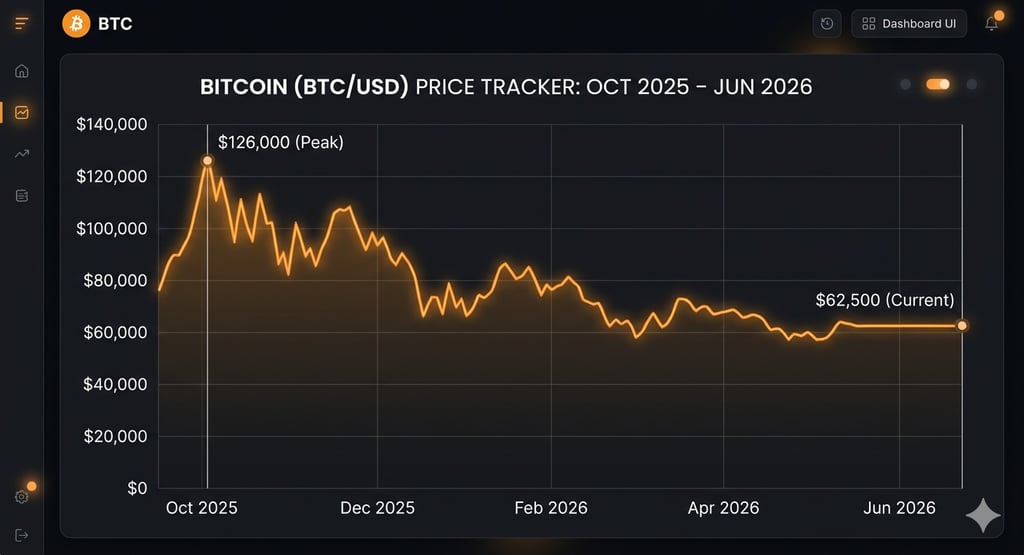
However, the end of Bitcoin’s aggressive bull cycle in the first half of 2026 and the stabilization of spot prices in the current $62,000 to $65,000 range exposed internal frictions within the leveraged model. The carrying cost of the capital structure, inflated by the requirement to honor 11.5% fixed annual yields on the series STRC ("Stretch") preferred shares, demanded immediate liquidity exceeding the available cash balance of $1.1 billion. The necessity to settle current obligations forced management to violate its public absolute retention directive, sparking debate across New York arbitrage desks and risk management firms regarding Strategy's institutional resilience.
Market Analysis and Financial Structure
The Broken Institutional Commitment and Price Dynamics
Throughout the recent multi-year cycle, Michael Saylor cultivated an image of operational inflexibility within the crypto asset market, publicly asserting that Strategy would never liquidate its holdings. Historical records detail this positioning across multiple corporate and mass media channels:
February 2025: During a market drawdown that temporarily pushed Bitcoin below the $85.000 technical support level, Saylor posted on X advising investors to retain the asset regardless of financial or personal cost.
February 2026: In an interview on CNBC’s Squawk Box, confronted by journalist Andrew Ross Sorkin, the executive reiterated the policy of perpetual quarterly purchases, dismissing scenarios involving divestment or strategic exits.
The breach of this guidance was formalized through an 8-K filing submitted to the Securities and Exchange Commission (SEC) on June 1, 2026. The regulatory report confirmed that the company divested 32 Bitcoins in transactions executed between May 26 and May 31, 2026. The divestment generated $2.5 million in gross proceeds, with a volume-weighted average price fixed at $77,135 per unit.
Historically, this represented the first liquidation of digital assets enacted by Strategy in a four-year interval. The immediately preceding transaction was recorded in December 2022, a period that coincided with the collapse of the FTX exchange and the consolidation of Bitcoin's macroeconomic cycle floor near the $15,000 region.
The capital market's response during the trading session on June 19, 2026, indicated a deterioration in risk perception among institutional investors:
Class A common shares (MSTR) posted a daily decline of 3.46%, closing the session at $112.25.
On a monthly basis, the equity's depreciation reached 31% since the accounting data was disclosed to the SEC.
The 12-month performance points to a 70% retracement from the all-time high established near $457 per share.
Balance Sheet Architecture and Leverage Vectors
To evaluate Strategy's operational stability, a cold audit of the consolidated balance sheet figures for June 2026 is required. The company's portfolio and obligations are divided into two distinct balance sheet categories:
Balance Sheet Line (Assets)Metric / Accounting ValuationTotal Bitcoin Reserve
"Average Acquisition Cost $846,842 units"
O erro: Do jeito que estava escrito, parecia que o custo de aquisição era de 846 mil dólares. Para o leitor estrangeiro entender que isso é a quantidade de moedas, deve-se usar units held (unidades detidas).
"Balance Sheet Line (Liabilities & Obligations)Metric / Accounting ValuationSenior..."
O erro: Falta de espaçamento e pontuação. Juntou o título da coluna com o primeiro item (ValuationSenior). Foi corrigido separando os blocos de Ativos (Assets) e Passivos (Liabilities).
"$1.1 billion in fiat currency"
Ajuste: Em balanços, usa-se o termo técnico fiat-denominated debt ou apenas indica-se entre parênteses para não quebrar a formalidade da linha.
"Total Accumulated Preferred Liabilities $888 million. Exceeds $13.5 billion"
O erro grave de redação: Dizer simplesmente que "888 milhões excede 13.5 bilhões" é um erro gramatical e lógico em inglês (um número menor não excede um maior). Se os 13.5 bilhões se referem ao total cumulativo das obrigações futuras, a redação precisa deixar isso explícito usando termos como total aggregate obligations ou total projected commitments.
The financial engineering mechanics deployed by Strategy rely on maintaining a market value premium over net asset value, known in financial literature as mNAV (Market Net Asset Value). When the mNAV is calibrated above a 1.0 multiplier, executing at-the-market (ATM) equity offering programs acts accretively. This process allows each newly issued share to secure a proportionally larger amount of Bitcoin than the dilution imposed on the pre-existing shareholder base.
The model's stress manifests in the mNAV's retreat to the 1.15 mark in June 2026. Although the indicator remains in premium territory, the compression from historical peaks substantially reduces the marginal efficiency of new capital raises. Additionally, the STRC ("Stretch") preferred shares, structured with an 11.5% fixed annual return on face value, suffered heavy depreciation in the secondary market. The securities ended the week priced at $87, establishing an all-time low since issuance and registering a 13% discount against the original $100 par value. Macroeconomist and critic Peter Schiff used his public platforms to emphasize the behavior of STRC bonds as evidence of structural fracturing in the capital engineering conceptualized by Saylor.
Short-Term Scenarios and the Healthy Correction Trend
Short-term technical market realities push back against projections of an immediate recovery to historical highs. In the ultra-short term, specifically over the next 15 days, technical analysts point out that a move toward $100,000 is not supported by current order flow or momentum indicators. Bitcoin's actual trend remains one of a healthy correction, with the asset trading within expected technical parameters for long-term position rebalancing.
Current risk modeling suggests that Bitcoin's price will continue its technical correction path, with the potential to break below the psychological $50,000 barrier and test the consolidated support zone between $40,000 and $48,000. Any eventual trend reversal or commencement of a new aggressive bull cycle is projected by arbitrage desks to occur only toward the close of the second half of the year or early 2027.
Underlying this dynamic is the principle that purchasing at depressed price levels historically constitutes an efficient asset allocation strategy. While convergence toward the $40,000 to $48,000 range temporarily pressures corporate treasury accounting, it simultaneously opens a window of opportunity to reacquire assets under significantly cheaper conditions. The company's average acquisition cost is fixed at $75,699 per coin; therefore, this extended correction period acts as a purgative for global market leverage excesses, resetting the asset onto a sounder foundation for future growth.
Projections and Risk Scenario Modeling
Recent developments in Strategy's corporate governance have prompted deep revisions in projections formulated by investment banks and independent risk analysis firms. A consolidated survey by financial publication TheStreet on June 19, 2026, pointed to the market probability distribution for three distinct corporate evolution scenarios:
Base Scenario (70% probability): Management continues the monthly, fractional sale of Bitcoin at non-accretive macroeconomic levels. This dynamic is expected to maintain residual selling pressure on MSTR equity, forcing the mNAV premium toward the 0.70 level while ensuring minimum yield payments to STRC bondholders.
Intermediate Scenario (25% probability): Strategy executes a massive, block divestment plan, liquidating between $3 billion and $4 billion in Bitcoin via over-the-counter (OTC) desks. The move would aim to secure immediate operational breathing room and permanently stabilize the short-to-medium-term liability structure.
Nuclear Scenario (5% probability): The board of directors decrees a unilateral suspension of preferred share dividend payments. The measure would instantly stem the estimated $1.7 billion annual cash outflow but would result in an abrupt shutdown of Strategy's access to debt and capital markets, alongside triggering severe rating downgrades by credit risk agencies.
Wall Street crypto analysts adopt divergent stances on the liquidation. Mark Connors, Chief Investment Officer (CIO) of risk monitoring firm Risk Dimensions, noted that the sale established a new hierarchy of priorities at Strategy, proving that capital structure health and the protection of creditors and preferred shareholders took technical precedence over the ideology of unconditional retention. Conversely, market strategist Crypto McKenna took a critical tone, warning that the actual volume required to roll over payouts across different economic cycles could demand the liquidation of over $1 billion in Bitcoin reserves, permanently altering the perpetual accumulation identity that sustained the premium on MSTR shares.
Conclusion
An analysis of Strategy's accounting data and regulatory movements indicates a narrative strain but rules out insolvency hypotheses in the ultra-short term. The company retains a crucial technical safeguard: the entirety of its 846,842 Bitcoin tokens remains unencumbered, having never been offered as collateral for any active credit lines. Consequently, external creditors hold no contractual prerogatives for forced asset liquidations (margin calls) against the corporate treasury. Additionally, the amortization schedule shows that the first macro-relevant maturity associated with senior convertible notes will not occur until 2027.
Management maintains residual purchasing activity, evidenced by the recent acquisition of 1,587 Bitcoins through a $100 million capital deployment reported this week. The immediate challenge is confined to maintaining the market premium of its common stock, a vital element for the capital-raising engine to continue operating without penalizing the equity base.
Should the healthy correction extend into the coming weeks, driving spot prices into the $40,000 to $48,000 range, the market projects that Strategy possesses the managerial resilience to navigate the period. Michael Saylor stands today as one of the preeminent corporate managers of his generation, holding the position of the world's largest individual and institutional investor in crypto assets, and serving as the primary global benchmark for this market. Faced with the current stress window, the broad governance framework and deep technical expertise of his team provide Saylor with the necessary mechanisms to bypass liquidity constraints without major operational difficulties.
Among the available tools, the probability of liquidating additional fractions of Bitcoin to service dividend payments is evaluated by arbitrage desks as a strictly strategic move, devoid of the capacity to inflict real equity damage on the enterprise. Because the macroeconomic thesis anticipates that the asset will reverse its correction toward a new growth cycle late in the year, temporary sales allow Strategy to execute repurchases and reinvestments of substantially larger volumes under significantly more attractive valuations. This process is poised to resume an even more aggressive path of equity expansion with mitigated risk, given that the underlying asset will have traversed the entirety of its correction path and cleared excess volatility from the global market.
References
Securities and Exchange Commission (SEC). Form 8-K: Current Report under Section 13 or 15(d) of the Securities Exchange Act of 1934 - Strategy Inc. Official regulatory filing regarding asset reallocation and divestment, submitted June 1, 2026.
Strategy Investor Relations. Financial Results for the First Quarter 2026 & Shareholder Presentation. Quarterly earnings report and minutes from corporate governance approvals, June 8, 2026.
TheStreet. Institutional Survey: Capital Structure, Preferential Shares Decay and mNAV Multipliers in Corporate Crypto Vehicles. Market analysis published June 19, 2026.
Risk Dimensions Research. Credit Risk and Structural Cascades in Leveraged Crypto Treasury Frameworks. Technical note by CIO Mark Connors, June 2026 edition.
Onramp Financial Analytics. The Mechanics of mNAV Dilution and OTC Liquidations in Corporate Balance Sheets. Treasury monitoring white paper, 2026.
Market Data and Pricing: Historical closing metrics, order book data, and asset performance aggregated via TradingView, Yahoo Finance, Barchart, CoinDesk, Fortune, BeInCrypto, and Robinhood Markets as of June 19, 2026.
Contact
Newsletter
contact@economicfinanceworldwide.com
Fone: +55 54 991220659
© 2026. All rights reserved. https://economicfinanceworldwide.com/privacy-policy