
The Method Behind the Momentum: Deciphering Trump’s 2026 Trade Doctrinepost
Donald Trump
Salamon, Marcelo
4/24/20264 min read
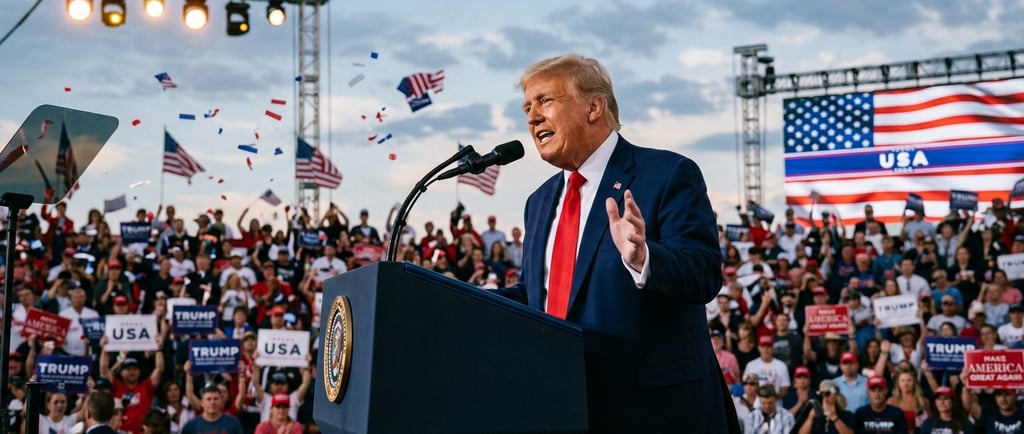
Executive Summary
This report analyzes the core objectives of the current U.S. trade strategy, characterized by the "maximum leverage" approach. By utilizing statutory tools such as the International Emergency Economic Powers Act (IEEPA) and Section 232, the administration aims to force trading partners into asymmetrical agreements that prioritize domestic production. The analysis distinguishes between short-term market turbulence and the long-term pursuit of "economic security." Ultimately, the administration views the stock market as a barometer of current health, while trade policy serves as a strategic instrument to rebuild critical sectors, such as semiconductors and pharmaceuticals, ensuring the nation’s future industrial sovereignty.
Introduction
The global economy in 2026 feels like a high-stakes chess match where the rules of the game are being rewritten in real-time. At the center of this transformation is Donald Trump’s "America First" trade policy—a whirlwind of tariffs, reciprocal agreements, and sudden market shifts that leave analysts and investors alike asking the same question: Is this a calculated masterstroke or a series of reactionary maneuvers?
To understand the "whys" behind the headlines, we have to look past the volatility and examine the core philosophy driving the administration's economic engine.
Intentionality vs. Chaos: The Leverage Play
The hallmark of the Trump administration’s trade strategy has always been the "maximum leverage" approach. Critics often view the sudden imposition of tariffs—such as the massive shifts following 2025’s "Liberation Day"—as a source of unnecessary market turbulence. However, the administration frames these moves as entirely intentional.
From the White House’s perspective, the "back and forth" isn't a sign of indecision; it is a feature of a negotiation style designed to force trading partners to the table. By declaring national emergencies on foreign trade and utilizing the International Emergency Economic Powers Act (IEEPA), the administration creates a sense of urgency. The goal is simple: create enough pressure that foreign nations feel compelled to negotiate asymmetrical deals that prioritize American domestic production.
Market Stability vs. National Interest
One of the most frequent debates is whether the administration prioritizes the stock market or the "trade war." While Trump frequently points to a resilient S&P 500 and record-high consumer spending as badges of honor, his trade actions suggest that long-term "economic security" often takes precedence over short-term market tranquility.
For instance, even when the Supreme Court recently challenged the use of certain tariff authorities, the administration immediately pivoted to other statutory tools like Section 232. This indicates that the drive for "energy dominance" and the rebuilding of critical sectors—like semiconductors and pharmaceuticals—is considered more vital than avoiding a few days of "red" on Wall Street. The market is viewed as a barometer of current health, but trade policy is the scalpel used to ensure the country's future strength.
What Is the Goal?
Inside the mind of the administration, the ultimate objective is a "production-centered" economy. The logic follows that the United States has been disadvantaged by a global system that rewards foreign imports over domestic exports. By utilizing tariffs as "peace-protecting" tools of statecraft, the administration aims to:
Rebalance Relationships: Move away from broad, rules-based global orders toward bilateral agreements like the Agreement on Reciprocal Trade (ART).
Reshore Manufacturing: Use cost pressures to force companies to bring supply chains back to American soil.
Bolster National Security: Ensure that the U.S. is not dependent on geopolitical rivals for essential resources.
Conclusion
As we navigate through 2026, it is becoming clear that the fluctuations in trade policy are rarely accidental. They are part of a broader, deliberate strategy to use economic might as a diplomatic tool. While the "trade war" and the "economic market" are often at odds in the short term, the administration operates on the belief that a temporary struggle in the markets is a price worth paying for a fundamental restructuring of global trade.
Whether this strategy will lead to the "economic abundance" the Treasury promises or result in long-term inflationary pressures remains to be seen. However, one thing is certain: in the world of Trumpian economics, the "trade" is the tactic, and "America First" is the permanent north star.
Conclusion
As we navigate through 2026, it is becoming clear that the fluctuations in trade policy are rarely accidental. They are part of a broader, deliberate strategy to use economic might as a diplomatic tool. While the "trade war" and the stock market are often at odds in the short term, the administration operates on the belief that temporary market struggle is a necessary price for the fundamental restructuring of global trade. Whether this strategy will lead to long-term prosperity or sustained inflationary pressure remains to be seen; however, the administration's commitment to this path is absolute. In the world of "America First" economics, trade is the primary tactic, and domestic dominance remains the permanent North Star.
Selected Bibliography
Council on Foreign Relations. Trade Policy and National Security: 2026 Strategic Assessment. (May 2026).
Goldman Sachs Research. The Impact of Tariff Cycles on U.S. Inflation and GDP Growth. (June 2026).
Peterson Institute for International Economics (PIIE). Global Economic Outlook: Policy Uncertainty and Trade Headwinds. (June 2026).
World Economic Forum. Resilience, Transition, or Disruption: The Global Economic Map in 2026. (May 2026).
U.S. Department of the Treasury. Framework for Reciprocal Trade and Economic Security. (2026).
Links:
https://amzn.to/4w7Z6oD Bicicleta Ergométrica Bike Spinning Bike Treino em Casa Academia Exercícios Cardio e Emagrecimento Design Confortável e Ajustável Vertical Silenciosa Ideal para Casa Linha Rhead Red High Premium aproveite rápido
https://amzn.to/4cxXv3G Bicicleta Elétrica Turbo 500w Scooter Potente Sem Cnh cor: Vermelho Tipo de bicicletaBicicleta elétrica MarcaS martway Tamanho100x35x180 Fonte de alimentação Alimentado por pilha
Contact
Newsletter
contact@economicfinanceworldwide.com
Fone: +55 54 991220659
© 2026. All rights reserved. https://economicfinanceworldwide.com/privacy-policy