
The Tariff Turnaround: What the Supreme Court’s Latest Ruling Means for Your Portfolio
The legal landscape of American trade just shifted beneath our feet.
2/21/20264 min read
Executive Summary
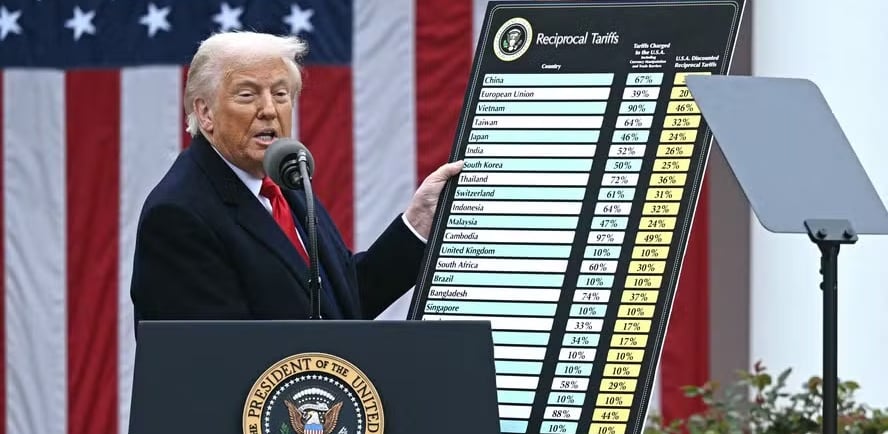
In a landmark 6-3 decision in Learning Resources, Inc. v. Trump (February 2026), the Supreme Court of the United States ruled that the International Emergency Economic Powers Act (IEEPA) does not authorize the President to impose sweeping tariffs. This ruling struck down the legal foundation for the administration’s "reciprocal" and "fentanyl" tariffs, which had generated approximately $166 billion in duties. While the ruling reaffirms the constitutional separation of powers—placing the taxing and tariff-setting authority firmly within Congress—it has created significant market uncertainty. As the administration pivots to alternative statutory authorities like Section 122 of the Trade Act of 1974, investors and supply-chain managers face a volatile environment characterized by litigation risks, potential refund disputes, and shifting international trade dynamics.
Introduction
The legal landscape of American trade underwent a seismic shift this year. In a landmark decision, the Supreme Court of the United States (SCOTUS) struck down a series of executive-imposed tariffs that had defined U.S. trade relations with Asia and other global partners for the past two years. This ruling is not merely a legal victory for importers; it serves as a massive financial catalyst, signaling a significant reshuffling of the U.S. supply chain and an immediate, albeit complex, impact on corporate profit margins and consumer costs.
The Verdict: Reclaiming Constitutional Authority
In a 6-3 ruling, the Supreme Court determined that the executive branch exceeded its constitutional authority by bypassing Congressional approval for broad-scale import duties. The Court’s majority, led by Chief Justice John Roberts, emphasized that the power to impose tariffs is a core component of the taxing power reserved for Congress under Article I of the Constitution. By interpreting the IEEPA—a 1977 law meant for national emergencies—as a tool insufficient for revenue-raising tariffs, the Court effectively dismantled the "reciprocal" tariff regime that had become the centerpiece of the administration’s economic strategy.
The decision has immediate implications. The legal basis for billions of dollars in duties has vanished, yet the transition to a post-IEEPA tariff environment is far from smooth. While the administration argued that these tariffs were essential for national security and managing foreign threats, the Court’s stance prioritizes the separation of powers, forcing the administration to seek more cumbersome and narrow authorities, such as Section 122, Section 301, or Section 232 of existing trade acts, to continue its protectionist agenda.
Wall Street Reacts: Winners, Losers, and Volatility
The financial markets have been in a state of flux since the initial ruling. Sectors heavily reliant on Asian supply chains—particularly technology and electronics—experienced an immediate surge as companies factored in the potential reduction of input costs. Giants like Apple and NVIDIA, which have faced significant margin pressure due to increased component costs, are evaluating how the removal of these specific duties might bolster their Q3 and Q4 bottom lines.
Conversely, retailers that import heavily from hubs in China and Vietnam—including major big-box stores like Walmart and Target—are seeing a relief rally. Analysts estimate these companies could save hundreds of millions in collective duties over the next fiscal year. However, the market reaction is tempered by the uncertainty regarding tariff refunds. A major point of contention is who should benefit from the $85 billion in potential refunds already being processed: corporations, or the consumers who arguably bore the cost through higher retail prices? This has opened a new front of class-action litigation that creates a "wait-and-see" approach for many institutional investors.
On the other side of the ledger, domestic steel and aluminum producers, who benefited from the protectionist wall, are bracing for renewed foreign competition. As the tariff shield dissipates, these domestic industries are seeing share prices face downward pressure, reflecting the market’s expectation of a more competitive, less protected pricing environment.
The Consumer Impact and Macroeconomic Reality
For the average American, the central question remains: "When will the cost of goods at the register decrease?" While the tariffs are legally gone, retail supply chains are rigid. Retailers often lock in prices and inventory costs months in advance, meaning the impact of duty removals will likely trickle down gradually. By the summer of 2026, many economists expect the "tariff tax" to ease, potentially saving the average household roughly $1,200 per year on imported goods and electronics.
From a macroeconomic perspective, this ruling acts as a natural deflationary pressure. With inflation metrics still stubborn, the judicial removal of these duties provides a fiscal relief valve. By lowering the cost of entry for foreign goods, the Court has inadvertently done the Federal Reserve’s job, potentially cooling price levels and reducing the urgency for the central bank to maintain high interest rates.
Conclusion
The "Tariff Wall" has a massive hole in it, and the economic landscape of 2026 is being rewritten in real-time. While the political fallout between the executive branch and Congress is only beginning, the economic reality is becoming clear: the transition toward lower operational costs and increased supply-chain efficiency is underway. However, the road ahead remains fraught with volatility. As businesses navigate a landscape of pending tariff refunds, potential class-action litigation, and the administration’s attempts to use alternative legal authorities to reimpose duties, the core lesson for investors is to remain selective. The era of unchecked executive tariff power has been checked by the judiciary, forcing a strategic shift back toward globalized, cost-competitive trade dynamics.
Bibliographic References
Supreme Court of the United States (SCOTUS). Learning Resources, Inc. v. Trump. Opinion delivered February 20, 2026.
U.S. Department of Commerce. Impact Analysis of Tariff Removal on Electronic Component Supply Chains. Washington, D.C., 2026.
Council on Foreign Relations. The Supreme Court Clipped Tariff Powers: Trade Battlefronts in 2026. June 2026.
Congressional Budget Office (CBO). Deflationary Impacts of Import Duty Reductions on Household Consumer Prices. 2026.
Brookings Institution. The Role of IEEPA and the Limits of Executive Economic Power. Washington, D.C., 2026.
Federal Reserve Economic Data (FRED). Projections on Inflation and Supply Chain Costs Post-Tariff Reform. 2026.
Contact
Newsletter
contact@economicfinanceworldwide.com
Fone: +55 54 991220659
© 2026. All rights reserved. https://economicfinanceworldwide.com/privacy-policy