
Trump’s Trade Gambit: The Return of the 1974 Trade Act
President Trump is utilizing Section 301 of the 1974 Trade Act to bypass Congress and rapidly implement tariffs, weighing the potential for domestic industrial protection against the risk of increased consumer costs and global market instability.
Salamon and Salamon
2/28/20263 min read
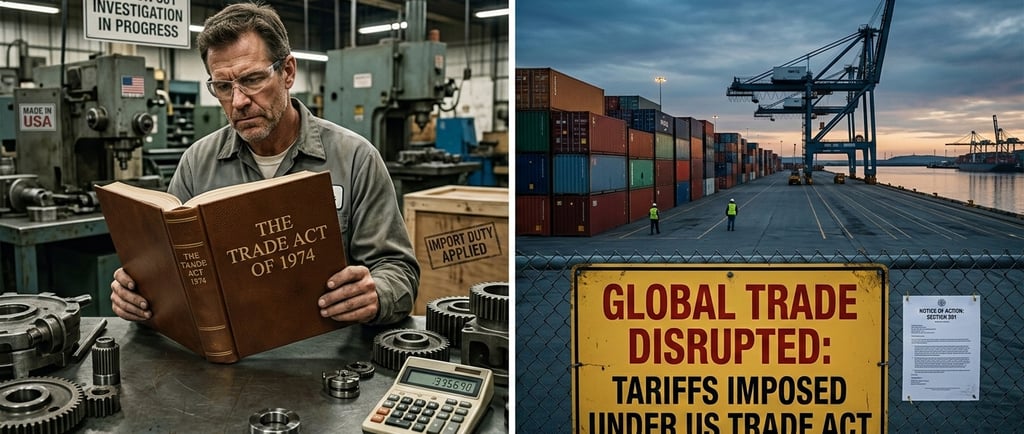
Executive Summary: The global trade landscape is undergoing a profound transformation as the administration shifts its strategy from emergency powers to established statutory authority. Following legal challenges to its initial tariff agenda, the White House is now leveraging Section 301 of the Trade Act of 1974 to implement targeted duties. This move, framed as a response to unfair trade practices and forced labor concerns, represents a "maximum pressure" approach to trade deficits. While the administration views this as a necessary step to protect domestic manufacturing and ensure fair competition, the policy introduces significant economic risks, including higher costs for consumers and the potential for retaliatory trade wars. As the government aggressively pursues these investigations, businesses must prepare for a prolonged period of tariff-driven supply chain volatility and uncertainty.
Introduction
The global trade landscape is currently bracing for a significant shift as President Donald Trump moves to implement a sweeping tariff agenda. Central to this strategy is a powerful, yet often debated, piece of legislation: The Trade Act of 1974. While modern trade discussions often center on recent treaties, the Trump administration is reaching back decades to find the legal teeth necessary to reshape American commerce.
The Mechanism: Section 301 and Executive Power
Under the Trade Act of 1974, specifically Section 301, the President is granted broad authority to investigate and respond to foreign trade practices that are deemed "unreasonable or discriminatory." Unlike traditional legislative routes that require a slow climb through Congress, this Act allows the Executive Branch to act with speed. The administration’s logic is clear: by framing these tariffs as a response to unfair trade imbalances and the protection of domestic industries, they can bypass the usual legislative gridlock.
The Economic Impact: What to Expect
The implementation of these tariffs is not just a political statement—it has immediate, tangible effects on the bottom line of businesses and consumers alike.
Cost to Consumers: Tariffs are essentially taxes on imported goods. When a $1,000 piece of industrial equipment or a $500 consumer electronics shipment enters the country, the added percentage-based duty is often passed directly to the buyer.
Market Volatility: Uncertainty is the enemy of the stock market. With the 1974 Act being used as a primary tool, global markets are reacting to the possibility of retaliatory "trade wars."
Supply Chain Shifting: Companies are already calculating the "cost of doing business." If a tariff turns a $2.00 component into a $2.50 component, many firms will look to relocate manufacturing to countries not targeted by the Act.
Legal and Global Pushback
Critics argue that using a 50-year-old law to dictate 21st-century digital and manufacturing trade is an overreach of executive power. International bodies, including the World Trade Organization (WTO), have frequently scrutinized the use of Section 301, claiming it undermines the multilateral trading system. However, the administration maintains that the dollar value of the trade deficit is a national security concern that justifies these "protectionist" measures.
Analysis of Trade Strategy
Regarding the core features of this policy, the legal basis is firmly rooted in Section 301 of the Trade Act of 1974. The primary goal of this implementation is the reduction of trade deficits and the protection of domestic U.S. manufacturing capabilities. Nevertheless, this strategy carries a significant economic risk, specifically concerning increased prices for imported goods and the potential for long-term domestic inflation. As the administration perspective states: "Trade must be fair, not just free. We are using every tool at our disposal to ensure American workers aren't left behind."
Conclusion
As these tariffs roll out, the world will be watching to see if this "America First" economic policy delivers the promised growth or if the increased costs to the American consumer will outweigh the benefits to domestic industry. The pivot to Section 301 marks a definitive move toward a more rigid, state-managed trade environment. For the legal and corporate sectors, navigating this new baseline will require constant vigilance, as the administration continues to use historical statutes to drive modern economic policy.
Note: This article is current as of June 14, 2026.
Selected Bibliography
Congress of the United States. Trade Act of 1974, Section 301 (19 U.S.C. § 2411).
Office of the United States Trade Representative (USTR). Report on Foreign Economies' Forced-Labor Import Regimes. June 2, 2026.
U.S. Court of Appeals for the Federal Circuit. Order regarding Section 122 Tariff Collections. June 2026.
Supply Chain Dive. Federal Court Temporarily Upholds Trump’s 10% Global Tariff. June 12, 2026.
Contact
Newsletter
contact@economicfinanceworldwide.com
Fone: +55 54 991220659
© 2026. All rights reserved. https://economicfinanceworldwide.com/privacy-policy